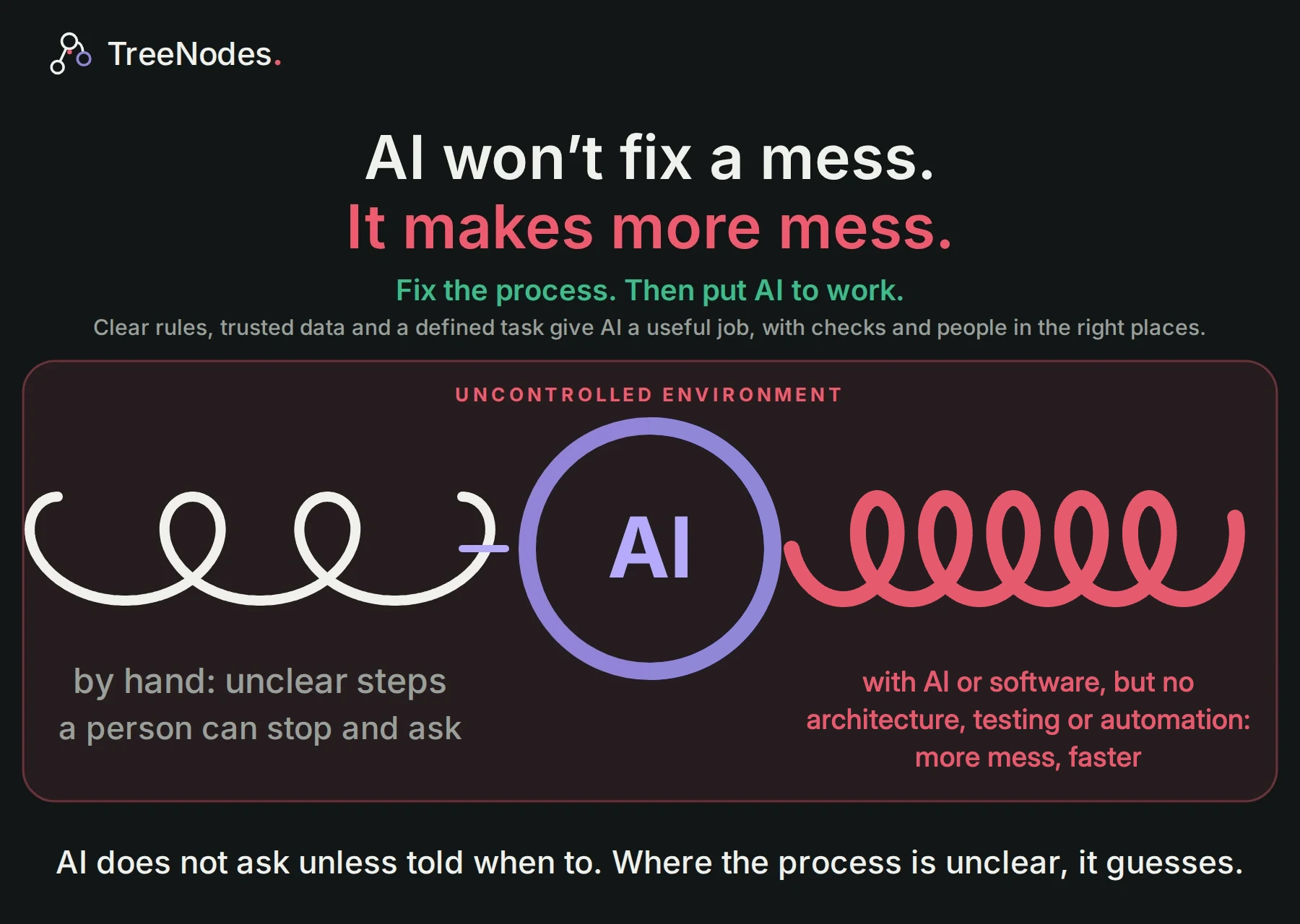
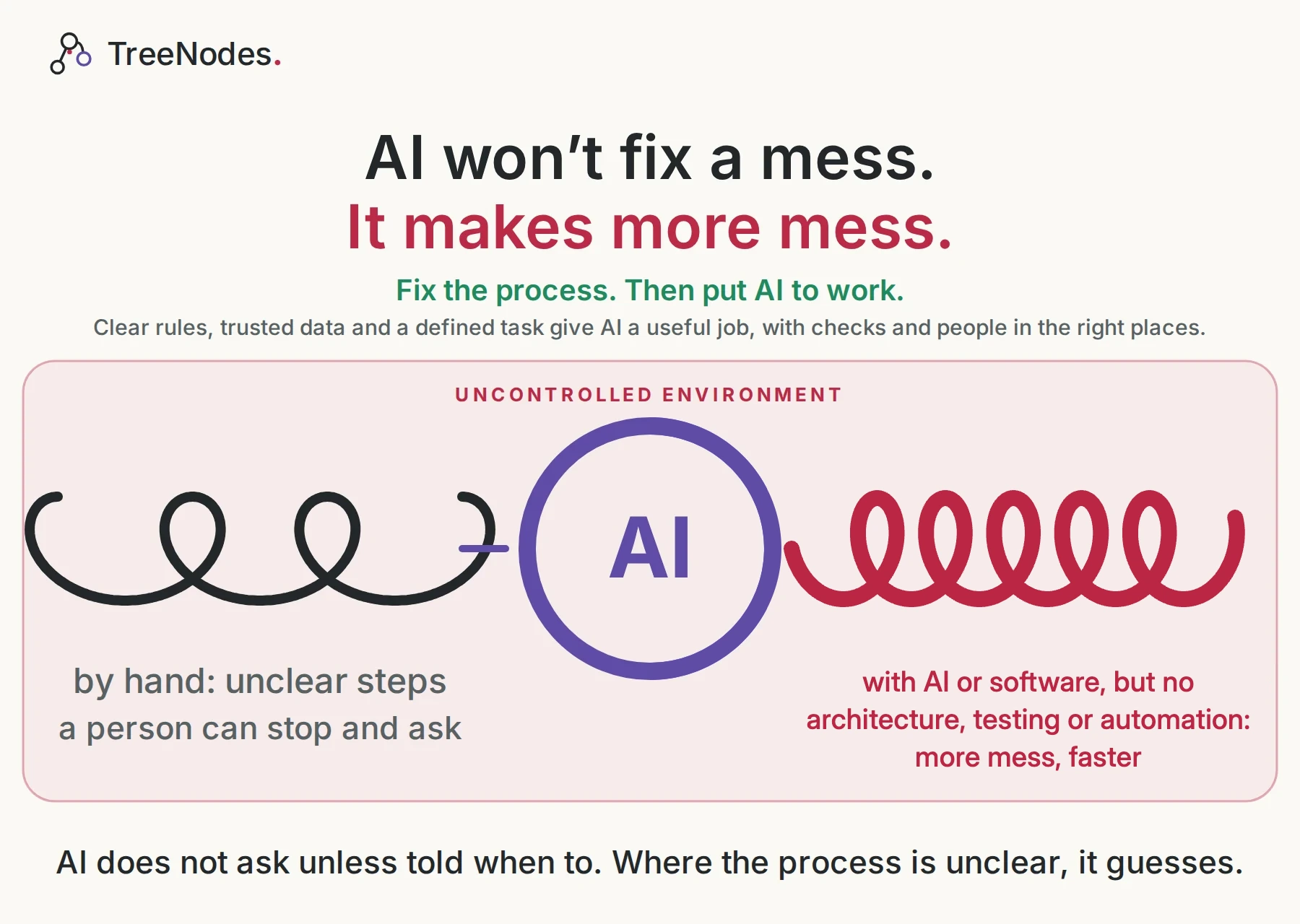
AI won’t fix a mess. It makes more mess.
Fix the process. Then put AI to work. Point AI at an unclear process and it won’t stop to ask. It will automate your mistakes, at volume.
 Nermien Barakat, Principal Software Architect & Engineer · 2 October 2026 · 5 min read
Illustrative example: one call-off at a supplier to trade and contractor customers, working to order or from stock.
Read the noteFrom the problem to the fix
The note in 1 minute
Video · no sound
The six slides as a silent one-minute walkthrough of the call-off example. The written note explains each step.
Michael Hammer’s 1990 warning still holds: don’t automate a bad process, fix it. AI makes it sharper. Where a step is unclear, a person stops and asks. A model works on probability: unless the task says when to stop, it gives the most likely answer, confidently and at volume.
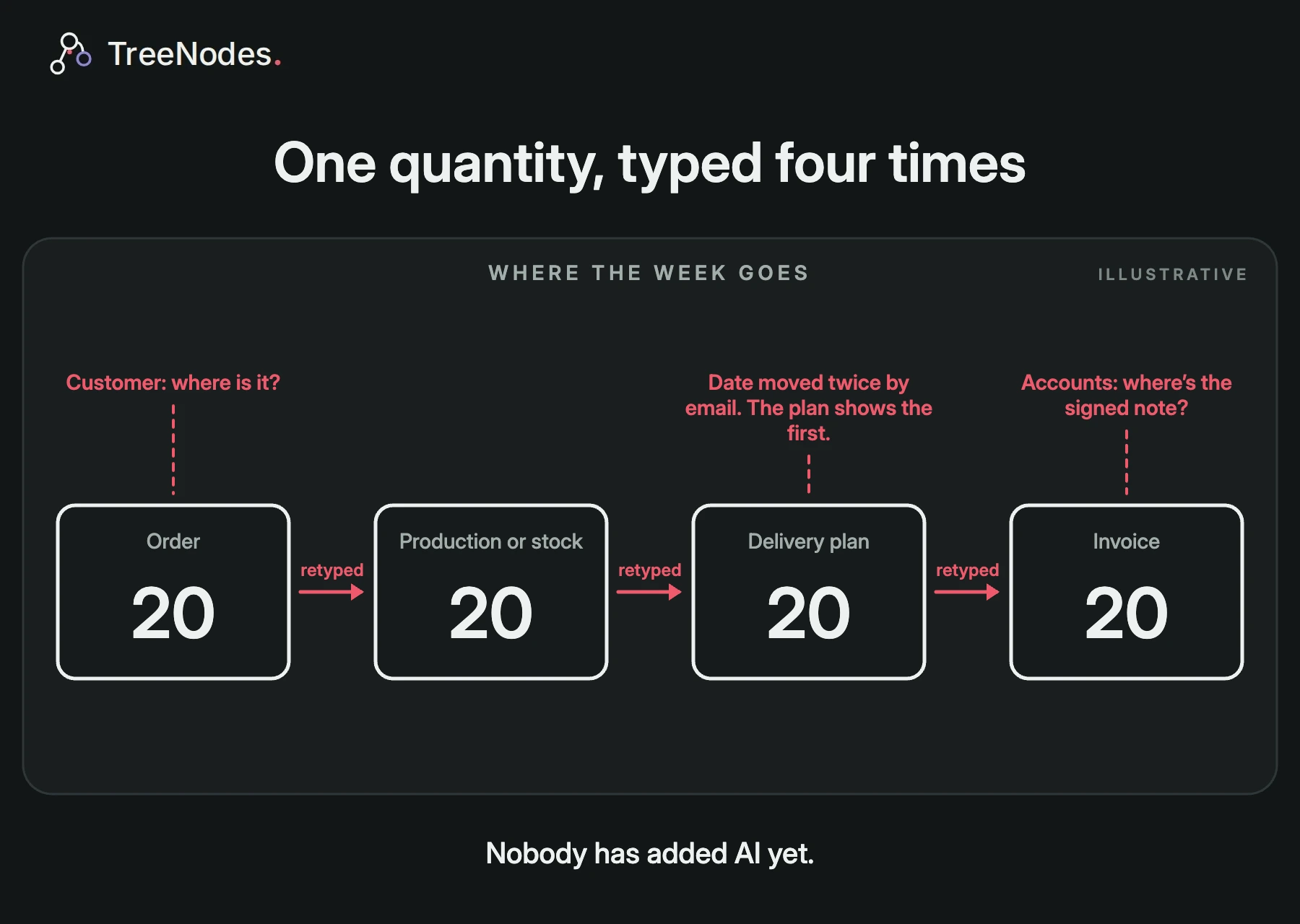
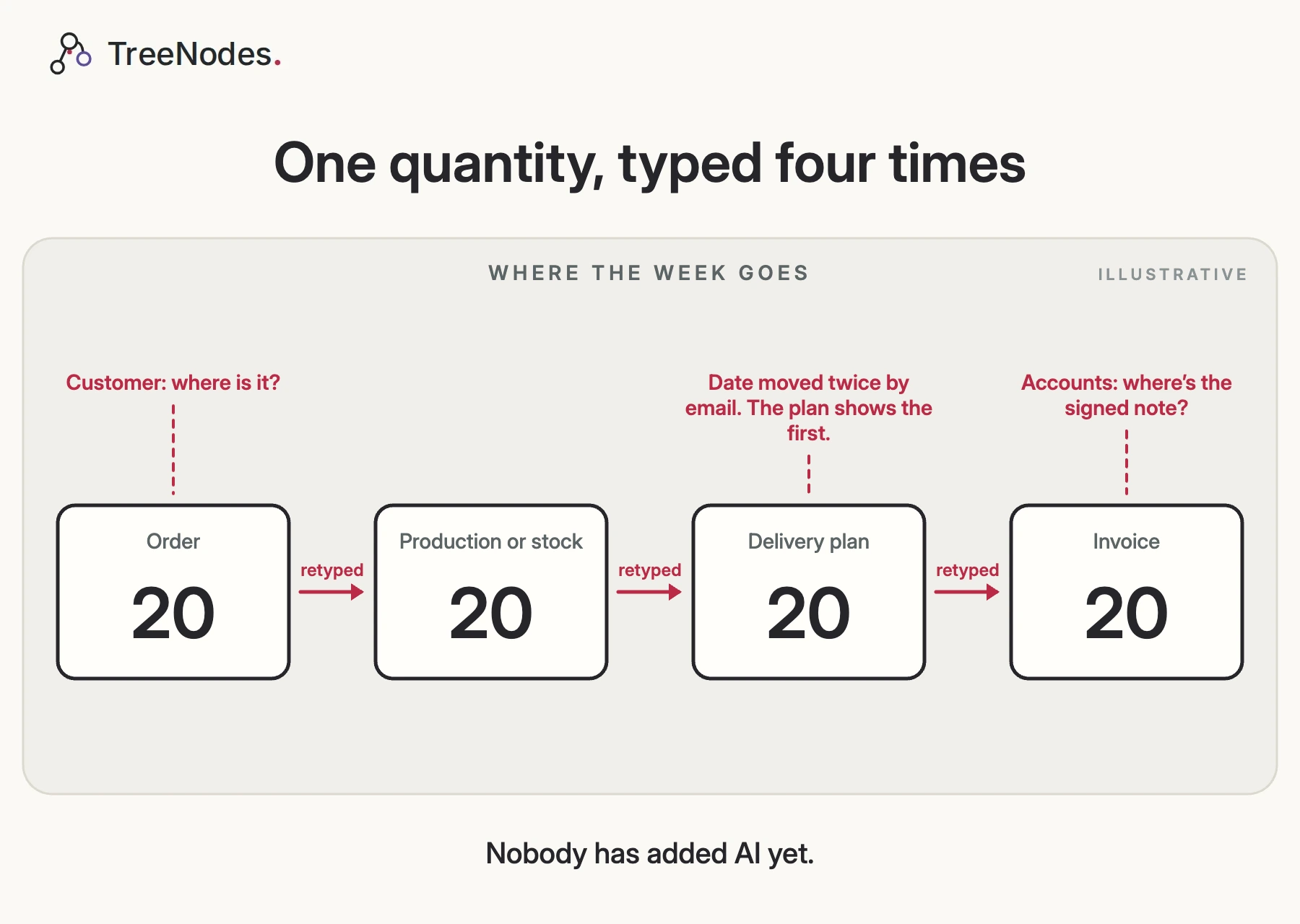
Take an ordinary week. A customer says yes. The same quantity is typed four times: into the order, production or stock, the delivery plan and the invoice. The date moves twice by email. The plan still shows the first. The customer chases the delivery. Accounts chase the signed note.
Now add AI. A repeat order arrives at last quarter’s price. AI reads it perfectly. Nobody has decided which price wins, so the system confirms the old one, faster.
The observation
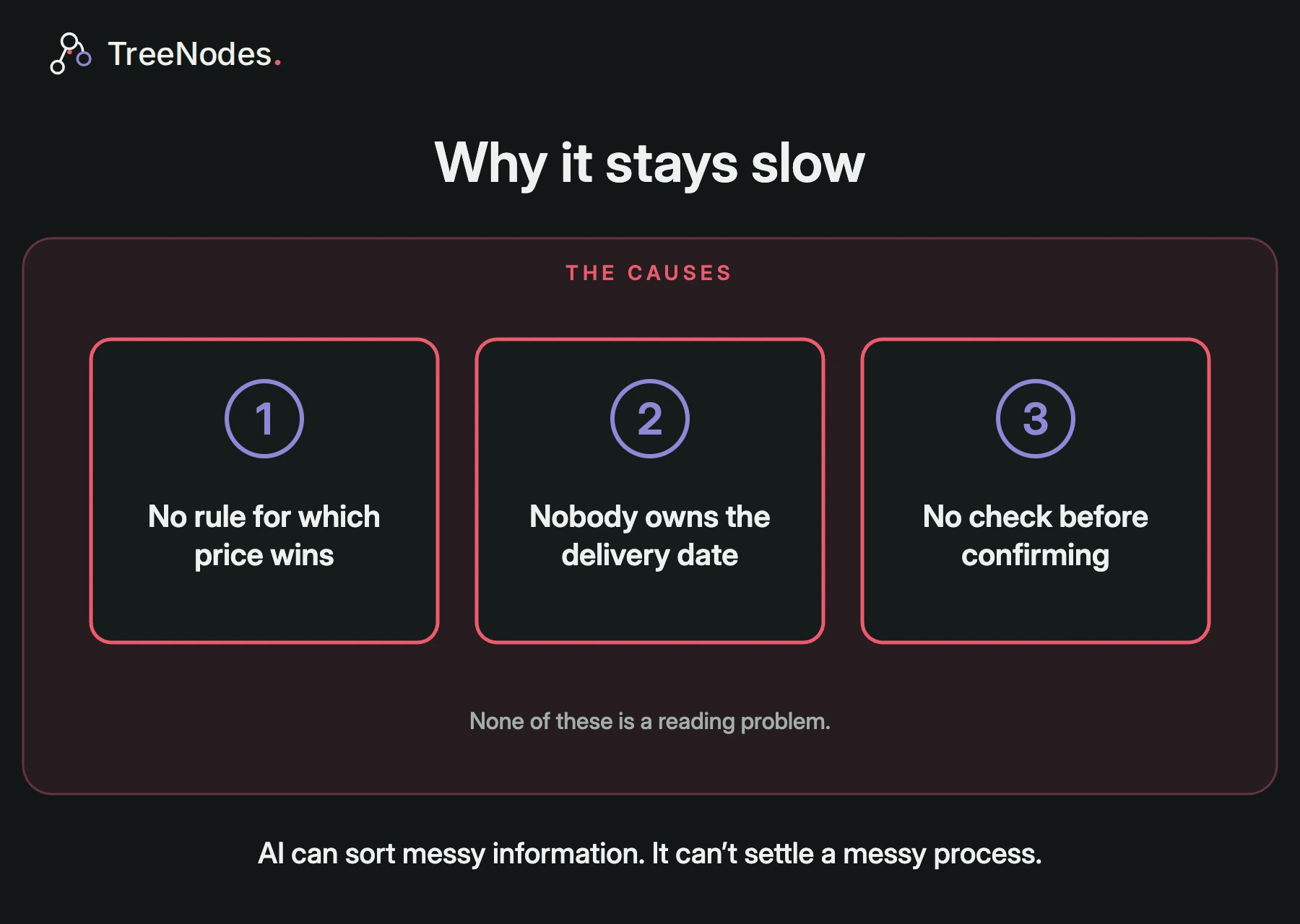
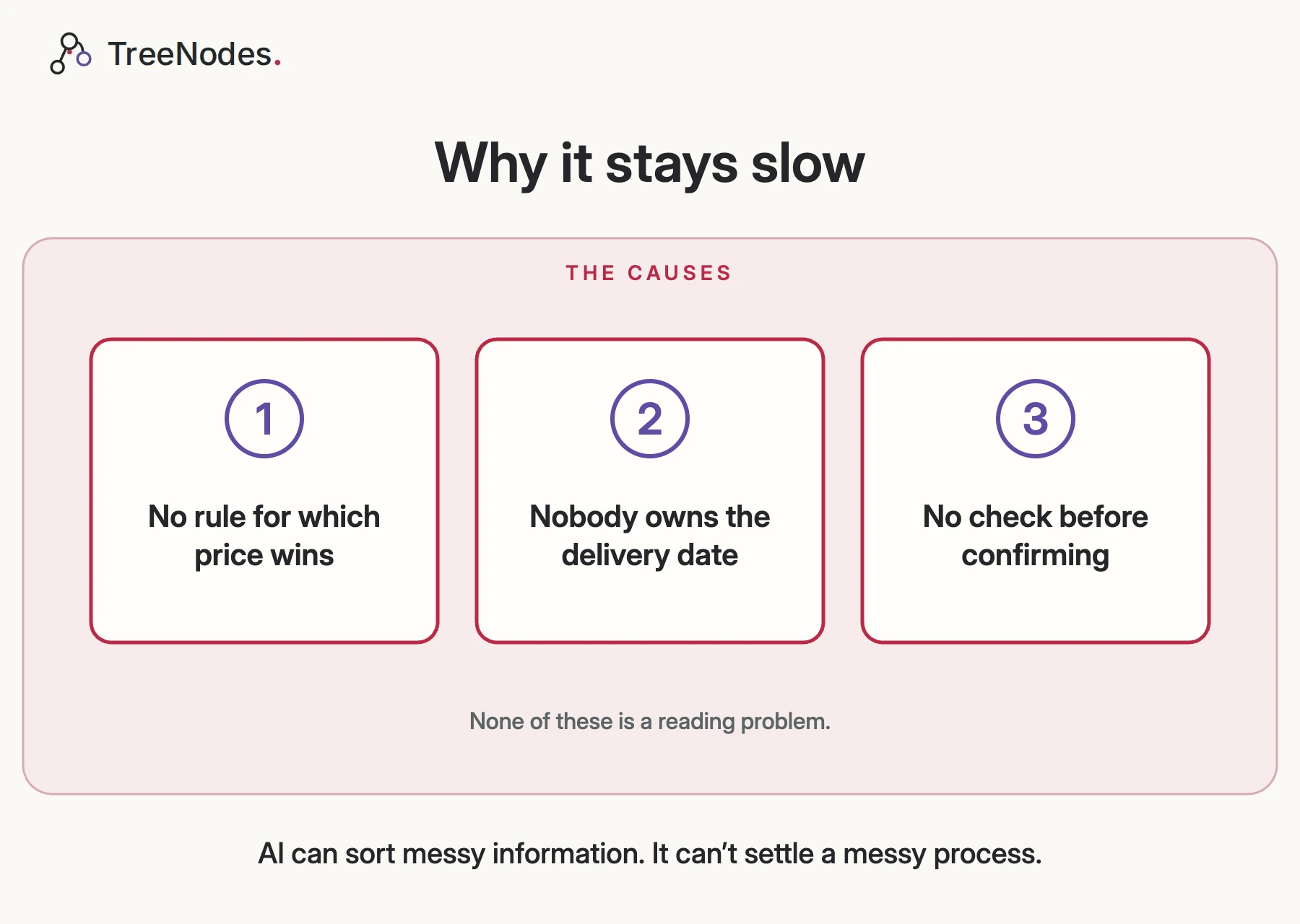
Why it stays slow
A common pattern: the delay is rarely in reading the order. It sits in handoffs and in three open decisions: which price wins, who owns the delivery date, and what is checked before confirming. If nobody has agreed what happens when a delivery is short, a faster system reaches the same unresolved decision sooner.
AI can sort messy information. It can’t settle a messy process.
Proposed solution
One call-off, done properly
Where AI earns its place
- Reading a call-off into one draft, each field linked to its source, whether it arrives as an email, a spreadsheet, a photo of a handwritten list or “same again, but 20 for Thursday”.
- Sorting what arrives into enquiries, new call-offs, amendments and chasers, and proposing which order each belongs to.
Some of this needs no AI. Entering a quantity once and listing every unanswered message is basic record-keeping.
AI works inside ordinary rules, run by software, that decide when work passes as a draft and when it stops. Here, a confirmation is drafted only if the price matches the agreed order, the quantity is ready for the date and the slot is free. Anything else stops for a named person. These checks are the definition of done, because AI works on probability: its answer is likely, not certain, even when it sounds sure. A model can suggest a rule; your business decides which rule applies.
Who does what
-
Call-off in
- AI proposes
- Sorts it, proposes which order
- Software checks
- Checks sender and order, logs it once
- Records prove
- Original message, agreed order
- People commit
- Sales office, if unmatched
-
Checked before confirming
- AI proposes
- Drafts the confirmation from the checked figures
- Software checks
- Checks price, quantity ready and slot
- Records prove
- Agreed order, production record, delivery plan
- People commit
- Operations manager approves every confirmation
-
Delivered and invoiced
- AI proposes
- Reads the signed note, handwriting included
- Software checks
- Checks it against dispatch, drafts the invoice line
- Records prove
- Signed delivery note, dispatch record
- People commit
- Accounts approve; operations if signed short
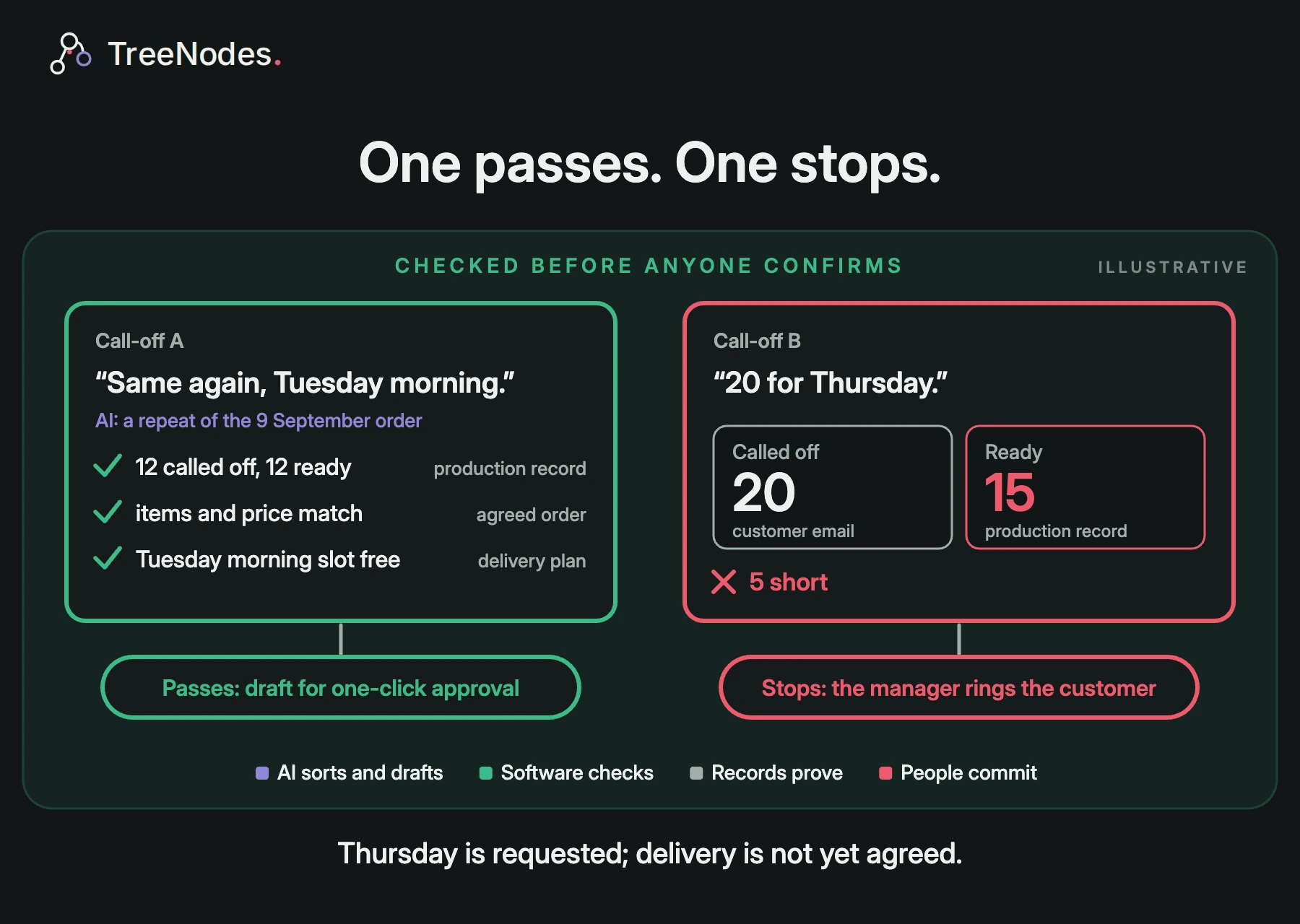
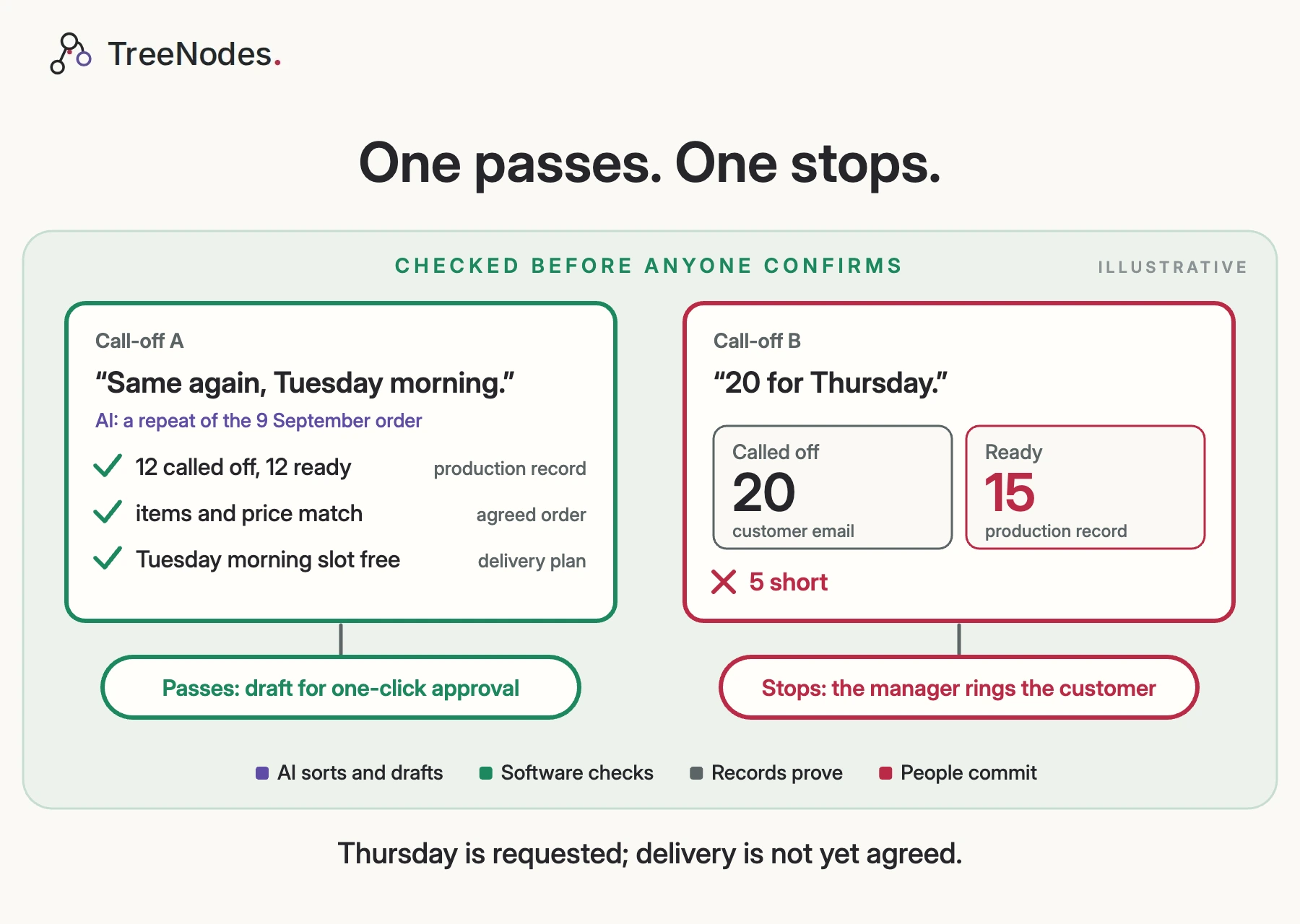
One passes. One stops.
IllustrativeCall-off A
“Same again, Tuesday morning.”
- Items and price match agreed order
- Tuesday morning slot free delivery plan
- Called off
- 12customer email, read as a repeat of the 9 September order
- Ready
- 12production record
Passes: drafted for approval. The operations manager approves with one click.
Call-off B
“20 for Thursday.”
- Called off
- 20customer email
- Ready
- 15production record
5 short
Stops: the operations manager rings to offer 15 on Thursday or all 20 later. AI drafts the follow-up; the manager sends it.
Nothing was misread. The check against the production record stopped B, not any doubt in the model. Thursday is requested; delivery is not yet agreed. Show the approver the evidence, not just a button.
Passing checks isn’t proof. Suppose A’s customer meant their second site, and AI linked “same again” to the first. Every check passes, because each tests the order AI picked. Sampling what passed finds it. The fix is a rule: a repeat from a customer with two open orders stops.
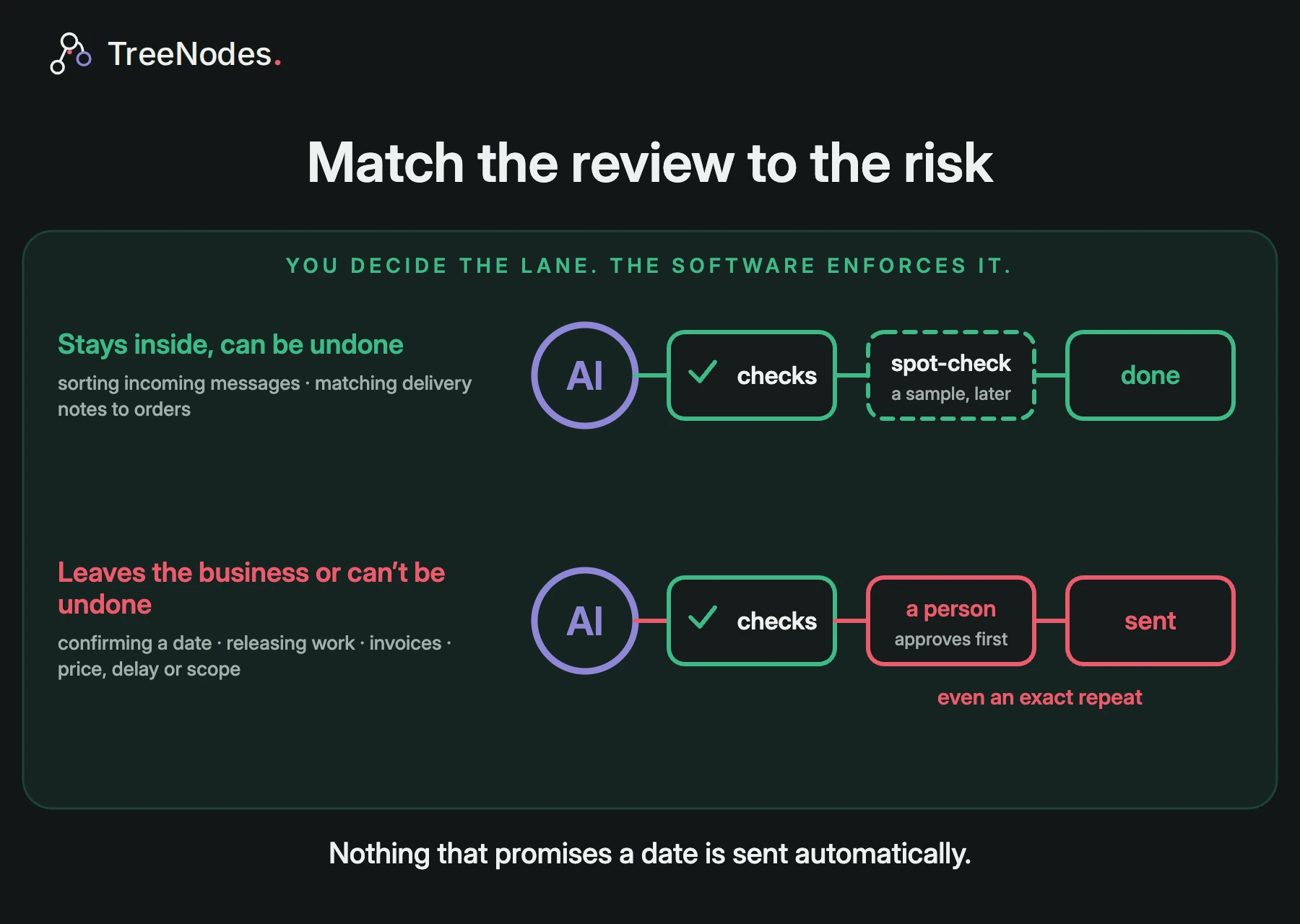
Match the review to the risk
Stays inside the business, can be undone
Sampled afterwards
- Sorting incoming messages
- Matching delivery notes to orders
Leaves the business or can’t be undone
A named person or deputy approves first, even an exact repeat
- Confirming a delivery date
- Releasing work to production
- Sending an invoice or application
- Any message about price, delay or scope
You decide which lane each step sits in, and the software enforces it. Nothing that promises a date is sent automatically.
What arrives is evidence for a person, never a command for the system. A customer’s “same price as last time” or a site manager’s “just do it” is logged for someone to confirm in writing, price or query. It can start a draft, never skip a check or approve anything.
The test
How you’d know it works
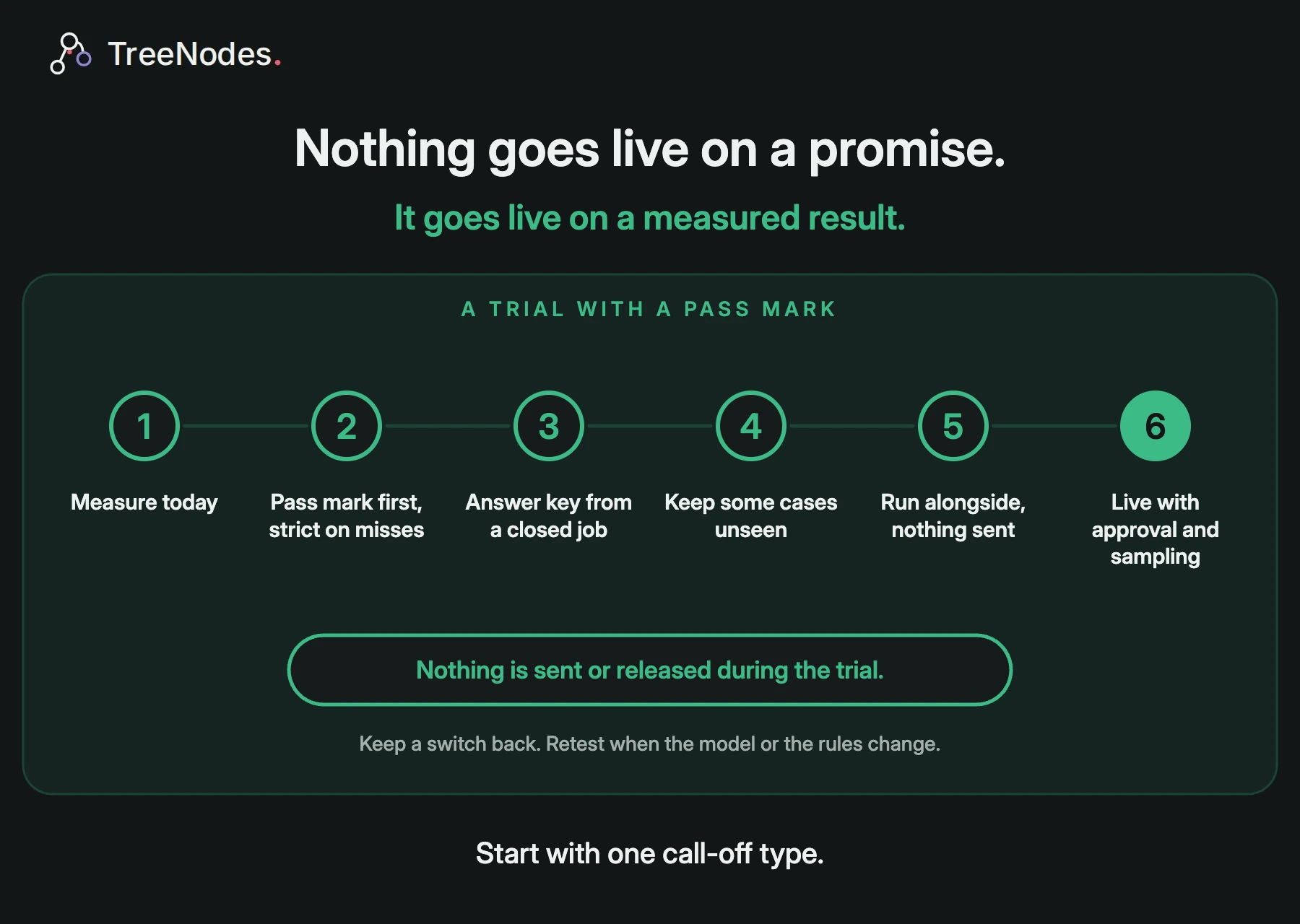
A trial with a pass mark
- Measure today: confirmations that didn’t match the order, deliveries rebooked or turned away, disputed quantities and credit notes.
- Set the pass mark first: strict on a missed difference, tolerant of the odd false alarm.
- Build an answer key from a closed job, reviewed under today’s rules, not copied from what was sent.
- Keep some cases unseen until the final score.
- Run it alongside the team, nothing sent or released.
- Go live on one call-off type, with one-click approval, sampling and a switch back. Retest when the model or rules change.
The next step
Where to start
Follow one recent order from the customer’s yes to the signed delivery note. Count how often the quantity was typed, who touched or chased it, where it waited, and which decision had no named owner.
Three questions
- Can you say within a minute what each customer was promised, and at which price?
- Is every change made by phone or on site written down, with a name against it?
- When a delivery will be short, is it clear who decides what the customer is told?
Start with the first no.
Where does your paperwork fall furthest behind the work: the order, the delivery or the changes agreed along the way?
Bring one request that keeps getting passed around. We’ll map the records, decisions and handoffs it needs.
Let’s map it